
Destinations: costs, timelines and admissions
Compare living costs, tuition, required language, admission periods and procedure length for each country. Clear figures to choose with full knowledge.
Upcoming admission sessions
The dates that matter for the 2027 intake, sorted by urgency. A file takes several months to prepare before the deadline.
Comparison table
Type a country or a field (medicine, computer science…) to filter the table and the guides.
| Country | Living / month | Tuition / year (non-EU) | Language | Admission period | Procedure | Visa |
|---|---|---|---|---|---|---|
| Germany | 800 – 1 000 EUR | Free public universities (semester fees 150-400 EUR) | German B1/B2 | 2 intakes: winter (Oct.) apply before 15 July; summer (April) before 15 Jan. via uni-assist | 4 to 8 months | National D visa: 6 to 8 weeks |
| France | 800 – 1 200 EUR | 2 895 EUR (bachelor) / 3 941 EUR (master) | French B2 | Campus France (Etudes en France): Oct.-Dec. for the September intake; Parcoursup (1st year): Jan.-March | 4 to 6 months | Long-stay student visa: 2 to 4 weeks after acceptance |
| Belgium | 850 – 1 100 EUR | approx. 5 010 EUR (university) | French | Applications usually before 30 April; intake in September | 3 to 5 months | Long-stay visa: 4 to 8 weeks |
| Spain | 700 – 1 100 EUR | 1 000 – 3 500 EUR | Spanish B1/B2 | UNED credential + applications April-June; intake Sept.-Oct. | 4 to 6 months | Student visa: 4 to 6 weeks |
| Portugal | 650 – 950 EUR | 1 500 – 7 000 EUR | Portuguese A2/B1 | National exam / international applications Feb.-July; intake Sept. | 4 to 6 months | Student visa: 4 to 8 weeks |
| Luxembourg | 800 – 1 200 EUR | 400 – 800 EUR / semester | French / English B2 | Applications before April-May; intake in September | 3 to 5 months | Visa / residence permit: 4 to 8 weeks |
| Poland | 300 – 500 EUR | 2 000 – 4 000 EUR (medicine 10-12 k) | English B1/B2 | Applications until summer (rolling); intake in October | 3 to 5 months | National D visa: 4 to 6 weeks |
| Brazil | 300 – 600 USD | Free public universities | Portuguese B1 | Varies by institution; intakes in Feb. and Aug. | 4 to 6 months | Student visa (VITEM IV): 4 to 8 weeks |
| Romania | 250 – 450 EUR | 2 000 – 5 000 EUR | English / French | Applications until summer; intake in October | 3 to 5 months | Long-stay D visa: 4 to 6 weeks |
| China | 220 000 – 440 000 FCFA | 1.3 – 3.1 M FCFA (public) | Mandarin HSK 4-5 (or English) | March 2027 intake with our offer; universities answer in 45 to 50 days | 2 to 4 months (start 8 to 12 months ahead for a scholarship) | X1/X2 student visa: 4 to 10 working days after submission |
| No country matches. Write to us: we also cover Canada, Japan and Mexico. | ||||||
Each country, point by point
Open a guide to see costs, calendar, points to watch and the most popular programmes.
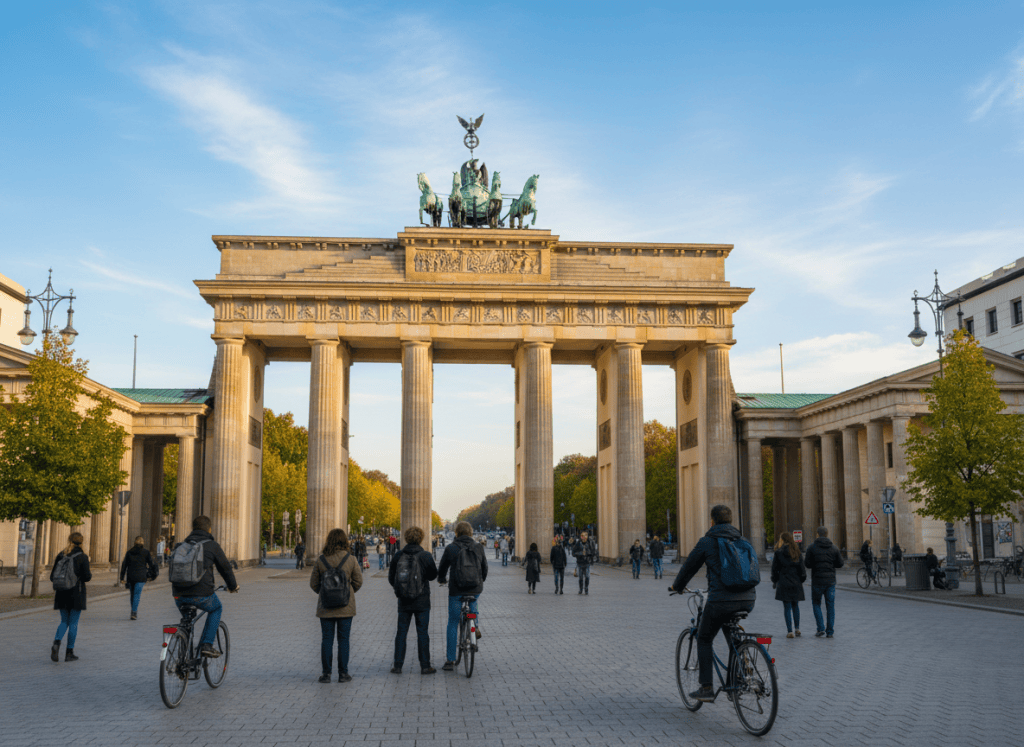
DEGermanyCentral EuropeFree public universities (semester fees 150-400 EUR) · living 800 – 1 000 EUR / month
- Living costs / month
- 800 – 1 000 EUR
- Tuition / year (non-EU)
- Free public universities (semester fees 150-400 EUR)
- Required language
- German B1/B2
- Admission
- 2 intakes: winter (Oct.) apply before 15 July; summer (April) before 15 Jan. via uni-assist
- Procedure length
- 4 to 8 months
- Visa
- National D visa: 6 to 8 weeks
- Public universities with no tuition fees (semester fees only)
- Blocked account required (about 11 904 EUR/year)
- Student work: 140 full days or 280 half days per year
- Strong demand for engineers and IT specialists
140 full days or 280 half days / year
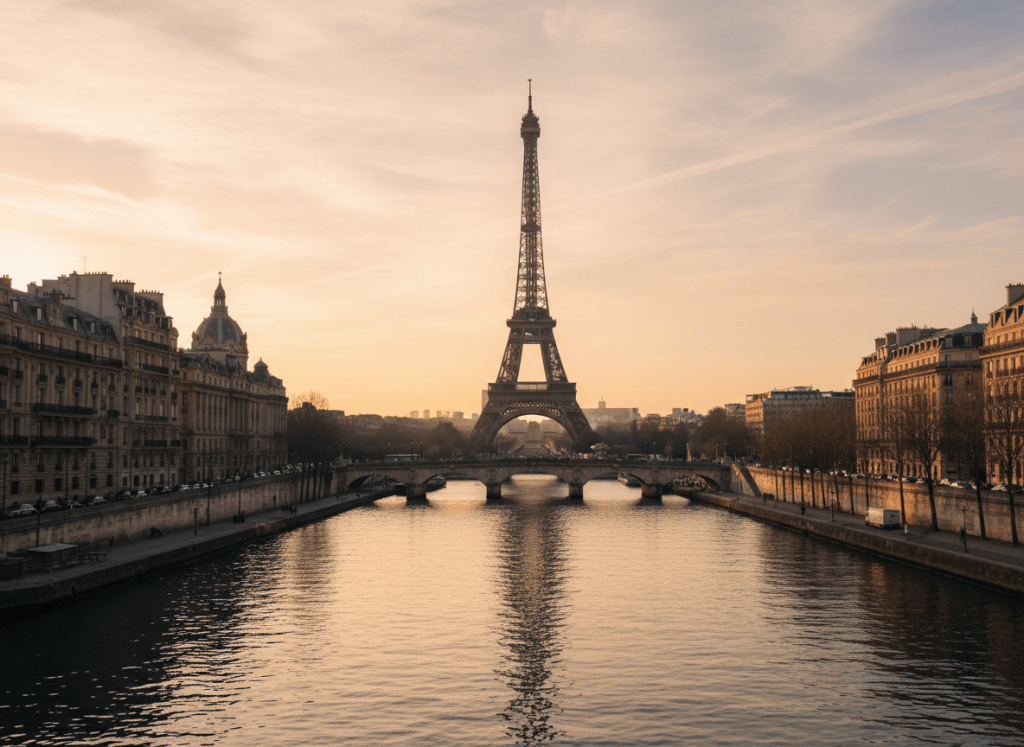
FRFranceWestern Europe2 895 EUR (bachelor) / 3 941 EUR (master) · living 800 – 1 200 EUR / month
- Living costs / month
- 800 – 1 200 EUR
- Tuition / year (non-EU)
- 2 895 EUR (bachelor) / 3 941 EUR (master)
- Required language
- French B2
- Admission
- Campus France (Etudes en France): Oct.-Dec. for the September intake; Parcoursup (1st year): Jan.-March
- Procedure length
- 4 to 6 months
- Visa
- Long-stay student visa: 2 to 4 weeks after acceptance
- Campus France procedure mandatory from Congo
- Differentiated fees for non-EU students: 2 895 EUR (bachelor), 3 941 EUR (master)
- Recognised Grandes Ecoles and universities
- Work up to 964 h/year (~20 h/week)
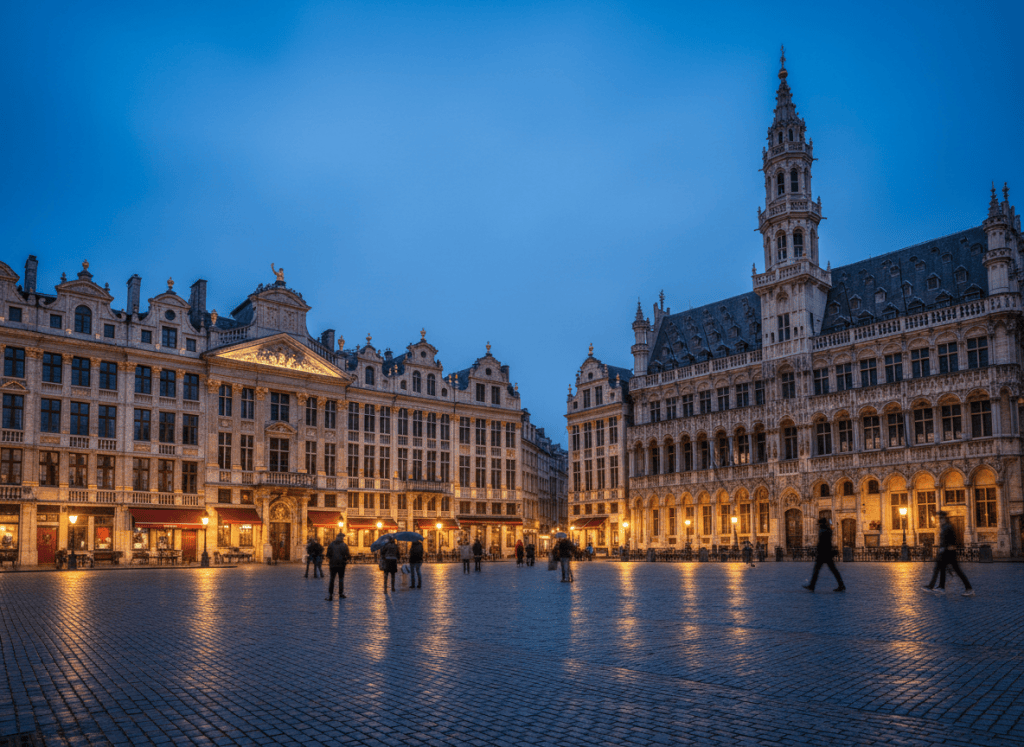
BEBelgiumWestern Europeapprox. 5 010 EUR (university) · living 850 – 1 100 EUR / month
- Living costs / month
- 850 – 1 100 EUR
- Tuition / year (non-EU)
- approx. 5 010 EUR (university)
- Required language
- French
- Admission
- Applications usually before 30 April; intake in September
- Procedure length
- 3 to 5 months
- Visa
- Long-stay visa: 4 to 8 weeks
- High-quality French-language teaching
- Moderate cost of living
- Diploma equivalence procedure to plan for
- Close to the European institutions
ESSpainSouthern Europe1 000 – 3 500 EUR · living 700 – 1 100 EUR / month
- Living costs / month
- 700 – 1 100 EUR
- Tuition / year (non-EU)
- 1 000 – 3 500 EUR
- Required language
- Spanish B1/B2
- Admission
- UNED credential + applications April-June; intake Sept.-Oct.
- Procedure length
- 4 to 6 months
- Visa
- Student visa: 4 to 6 weeks
- Well-developed Erasmus programme
- High quality of life
- Diploma homologation (credencial) required
- Attractive climate and cost of living
PTPortugalSouthern Europe1 500 – 7 000 EUR · living 650 – 950 EUR / month
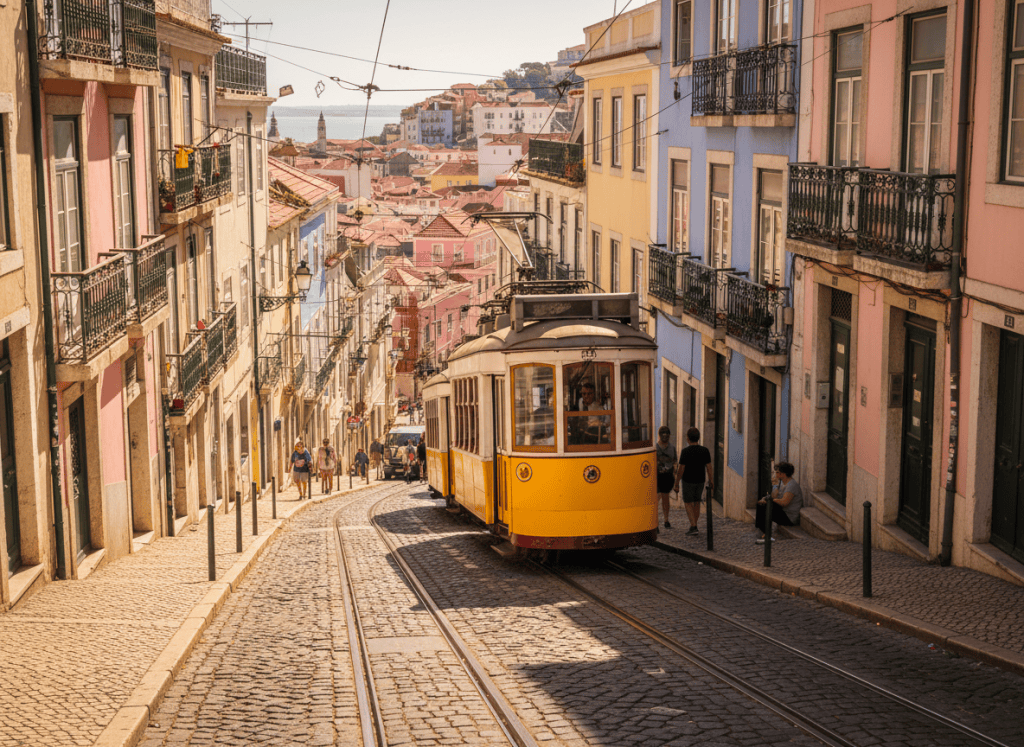
- Living costs / month
- 650 – 950 EUR
- Tuition / year (non-EU)
- 1 500 – 7 000 EUR
- Required language
- Portuguese A2/B1
- Admission
- National exam / international applications Feb.-July; intake Sept.
- Procedure length
- 4 to 6 months
- Visa
- Student visa: 4 to 8 weeks
- One of the most accessible destinations
- French- and Portuguese-speaking community
- Simplified procedure for many profiles
- Safety and quality of life
20 h/week + full time during holidays
LULuxembourgCentral Europe400 – 800 EUR / semester · living 800 – 1 200 EUR / month
- Living costs / month
- 800 – 1 200 EUR
- Tuition / year (non-EU)
- 400 – 800 EUR / semester
- Required language
- French / English B2
- Admission
- Applications before April-May; intake in September
- Procedure length
- 3 to 5 months
- Visa
- Visa / residence permit: 4 to 8 weeks
- International financial hub
- Multilingual environment
- High salaries and opportunities
- High cost of living to plan for
PLPolandEastern Europe2 000 – 4 000 EUR (medicine 10-12 k) · living 300 – 500 EUR / month
- Living costs / month
- 300 – 500 EUR
- Tuition / year (non-EU)
- 2 000 – 4 000 EUR (medicine 10-12 k)
- Required language
- English B1/B2
- Admission
- Applications until summer (rolling); intake in October
- Procedure length
- 3 to 5 months
- Visa
- National D visa: 4 to 6 weeks
- English-taught programmes
- Recognised, affordable medicine
- One of the lowest costs of living in Europe
- No need for German or French
BRBrazilSouth AmericaFree public universities · living 300 – 600 USD / month
- Living costs / month
- 300 – 600 USD
- Tuition / year (non-EU)
- Free public universities
- Required language
- Portuguese B1
- Admission
- Varies by institution; intakes in Feb. and Aug.
- Procedure length
- 4 to 6 months
- Visa
- Student visa (VITEM IV): 4 to 8 weeks
- Free public universities
- Language close to European Portuguese
- Great cultural diversity
- Living costs vary widely by city
RORomaniaEastern Europe2 000 – 5 000 EUR · living 250 – 450 EUR / month
- Living costs / month
- 250 – 450 EUR
- Tuition / year (non-EU)
- 2 000 – 5 000 EUR
- Required language
- English / French
- Admission
- Applications until summer; intake in October
- Procedure length
- 3 to 5 months
- Visa
- Long-stay D visa: 4 to 6 weeks
- Medical degrees recognised in the EU
- Very low fees and cost of living
- Programmes in English and French
- Accessible admission procedure
CNChinaAsia1.3 – 3.1 M FCFA (public) · living 220 000 – 440 000 FCFA / month

- Living costs / month
- 220 000 – 440 000 FCFA
- Tuition / year (non-EU)
- 1.3 – 3.1 M FCFA (public)
- Required language
- Mandarin HSK 4-5 (or English)
- Admission
- March 2027 intake with our offer; universities answer in 45 to 50 days
- Procedure length
- 2 to 4 months (start 8 to 12 months ahead for a scholarship)
- Visa
- X1/X2 student visa: 4 to 10 working days after submission
- Full offer: 2 050 000 FCFA, plane ticket included
- Paid in 4 stages, the largest part after admission
- Partial or full scholarships possible, never automatic
- Only one trip: submitting the file at the embassy
Part-time with permission
Detailed procedures: steps, budget, visa file
Click a destination. Each guide gives the budget line by line (in euros and FCFA), the visa document list and a realistic calendar.
DE Germany — University studiesFree public universities. A language-course route is possible for beginners.
Don’t speak German yet? The study preparation visa lets you leave with a conditional admission + enrolment in an intensive German course, then enter university. Students who already hold a certified level only take C1 on site.
Procedure budget
| Admission (university + language course) | 300 EUR197 000 FCFA |
| Mandatory health insurance | 150 EUR98 000 FCFA |
| Housing reservation / lease | 450 – 900 EUR295 000 – 590 000 FCFA |
| Blocked account (incl. bank fees) | 12 153 EUR7 972 000 FCFA |
| National visa fee | 75 EUR49 000 FCFA |
| Indicative total | approx. 13 100 EURapprox. 8 600 000 FCFA |
The blocked account is not a fee: it is your living money, paid back at about 992 EUR/month (651 000 FCFA) once you arrive. Alternative: a sponsor actually living in Germany (Verpflichtungserklärung).
Visa file
- National visa form (VIDEX) in 2 copies + signed declarations
- Valid passport, copies, biometric photos
- Admission letter + enrolment in the intensive German course
- Blocked account or sponsor’s declaration
- Health insurance and proof of housing
- Baccalaureate + transcripts (+ Bachelor for a Master), certified copies
- CV + motivation letter: the study plan is decisive
- Language certificate if available, birth certificate
Calendar and submission
Student work: 140 full days or 280 half days per year. Visa submission: German Embassy in Kinshasa (the Brazzaville embassy issues no visas) — we prepare the submission and the interview. Processing: several weeks to a few months.
DE Germany — Vocational training (Ausbildung)Get paid every month during your work-study training.
Classes at a vocational school + paid work in a company for 2 to 3.5 years, with employee-apprentice status from day one. The training itself is free.
Indicative salaries (gross / month)
| Nurse | approx. 1 340 EURapprox. 880 000 FCFA |
| Industry | approx. 1 200 EUR |
| Mechatronics | approx. 1 150 EUR |
| Electrician | approx. 1 100 EUR |
| General range | 850 – 1 500 EUR |
Blocked account: not always required. If the apprentice salary covers the required minimum, it may not be requested — the consulate decides case by case.
Requirements and calendar
- Baccalaureate or equivalent + good health and motivation
- German B1 minimum, B2 strongly recommended (required in healthcare)
- Signed Ausbildung contract with a company: the key document for the visa
- Hiring sectors: healthcare, industry, IT, automotive, hospitality, retail
The real delay is the language: from zero to B1/B2, allow 12 to 18 months of serious study. Starting German now in Pointe-Noire means aiming for an intake in late 2027 – early 2028.
DE Germany — Chancenkarte (job-seeker visa)Come to Germany to look for work, without a prior contract, through a points system.
The Chancenkarte (opportunity card) is a job-seeker visa : it lets qualified profiles stay in Germany to look for a job, with no employment contract before departure. Eligibility is based on points: recognised degree, work experience, language level.
Procedure budget
| Translation of documents into German | approx. 20 EUR / page |
| Degree recognition (federal ZAB office) | 500 EUR328 000 FCFA |
| Proof of housing | 400 – 600 EUR262 000 – 394 000 FCFA |
| Health insurance | approx. 250 EUR164 000 FCFA |
| Visa fee | 85 – 90 EUR56 000 – 59 000 FCFA |
| Proof of funds (12 months) | approx. 13 092 EURapprox. 8 590 000 FCFA — indexed amount |
Proof of funds (approx. 1 091 EUR/month) goes through a blocked account or bank statements: only the official bank confirmation showing the total amount and the monthly sum available is accepted. Degrees from Congolese public universities are generally recognised.
Visa file
- VIDEX form + 4 photos + valid passport
- CV + motivation letter
- Degrees and transcripts since the baccalaureate + recognition obtained
- Proof of work experience and payslips
- Language certificates: German A1/A2 and/or English B2
- Proof of housing + health insurance
- Proof of funds (blocked account or confirmed statements)
- Birth certificate
Steps and timing
1) Translation and authentication of documents (approx. 2 weeks). 2) Degree recognition: 3 weeks to 3 months. 3) Official points assessment: 6 points minimum (2 years of experience = 1 point, 5 years = 2 points; German A1 minimum recommended, English a plus). 4) Book the visa appointment 2 to 3 months ahead — submission at theGerman Embassy in Kinshasa.
BE Belgium — Studies in FrenchTwo starting points depending on your diploma: baccalaureate only, or Bachelor/Master.
Baccalaureate only: a diploma equivalence (Fédération Wallonie-Bruxelles) is required before enrolment — start 3 months earlier, from October-November. Bachelor or Master: no prior equivalence, direct application in January-February, usually before 30 April.
Procedure budget
| Baccalaureate equivalence (if baccalaureate only) | approx. 200 EUR131 000 FCFA |
| Admission file review | 0 – 200 EUR |
| Annual university fees (non-EU) | approx. 5 010 EURapprox. 3 300 000 FCFA |
| Annual Haute École fees | 4 400 – 4 600 EUR |
| Proof of means 2026-2027 | 1 062 EUR / monthapprox. 8 400 000 FCFA / year |
Proof of means is made by deposit/account or by a solvent sponsor through the commitment of financial support (annex 32). Fee waivers exist for scholarship holders — we check your case.
Visa file (D visa)
- Official enrolment certificate (after paying the fees)
- Medical certificate (approved doctor) + criminal record
- Proof of means: account or sponsor’s annex 32
- Baccalaureate / Bachelor + legalised transcripts, birth certificate
- Valid passport + photos + form
Calendar — September 2027 intake
Baccalaureate only: equivalence Oct.-Nov. 2026, admission Jan.-Feb., confirmation April-May, visa June-July. Bachelor/Master: admission from Jan.-Feb. 2027. Visa processing: 4 to 8 weeks. Work: 20 h/week during term.
PT Portugal — University or language courseThe best value for money. No blocked account required.
Two long-stay visas (type D, renewable): university studies (bachelor, master, PhD) or intensive language course with a possible move on to university. On arrival: apply to AIMA for a residence permit before the visa expires — we follow this step.
Procedure budget
| Admission fee (per institution) | 50 – 150 EUR33 000 – 98 000 FCFA |
| University tuition (international) | 1 500 – 7 000 EUR / year985 000 – 4 590 000 FCFA |
| Intensive language course | 250 – 500 EUR / monthor 1 500 – 3 000 EUR / year |
| Visa fee | approx. 90 EUR59 000 FCFA |
| Recommended funds | 6 000 EUR (6 months)8 000 – 10 000 EUR long stay |
No fixed amount and no blocked account: the consulate reviews bank statements for the last 3 months (yours or those of the person supporting you). The money needs a history — no large deposit that appeared the day before.
Visa file
- Passport + photos + application form
- Motivation letter + CV
- Diplomas + transcripts + admission letter
- Bank statements (3 months) or sponsorship certificate
- Accommodation: reservation, lease or certificate
- Health insurance valid in Portugal
- Recent criminal record + translations/legalisations if required
Timing and work
Processing: 30 to 90 days — apply at least 3 months before the intake. Work: 20 h/week during term, full time during holidays (prior declaration to AIMA). After graduation: 1 year of residence to look for a job.
ES Spain — Language course, then universityThe most flexible for student work: 30 h/week automatically.
Enrolment in an accredited language centre or a university partner institution, enrolment confirmation, housing, then the visa application 1 to 2 months before departure — appointments come with conditions, so start early.
Procedure budget
| Institution admission fee | 0 – 200 EUR0 – 131 000 FCFA |
| Enrolment confirmation deposit | 500 – 3 500 EUR328 000 – 2 296 000 FCFA |
| Housing / hotel + explanatory letter | 300 – 600 EUR197 000 – 394 000 FCFA |
| Public university tuition | 1 000 – 3 500 EUR / year |
| Recommended personal account | min. 4 000 000 FCFAor a solvent sponsor |
A sponsor can reduce the personal account requirement: stable income (approx. 2 000 000 FCFA/month) and solid savings (over 5 000 000 FCFA), with documents.
Visa file
- Official enrolment letter from the institution
- Medical certificate + criminal record
- Proof of funds: personal account or sponsor
- Proof of housing + explanatory letter
- Passport + photos + form
Work and next steps
The student visa automatically allows up to 30 h of work per week, and full time during holidays. After the language course: move on to university based on your admission.
CA Canada — Colleges and universitiesDegrees recognised worldwide. The highest financial requirement.
Since 2024, study permits are subject to quotas : each province has a quota of attestation letters (PAL) — in Quebec it is the CAQ. A Canada file is prepared 10 to 12 months ahead and relies on real, traceable financial capacity.
Procedure budget
| Admission application fee | 100 – 250 CAD43 000 – 108 000 FCFA |
| CAQ (Quebec) | 127 CAD55 000 FCFA |
| College / university tuition | 15 000 – 40 000 CAD / year6 500 000 – 17 200 000 FCFA |
| Study permit + biometrics | 150 + 85 CAD65 000 + 37 000 FCFA |
| Proof of funds (outside Quebec) | 22 895 CAD + tuition + ticketoften over 17 000 000 FCFA in total |
In Quebec: 24 617 CAD (approx. 10 600 000 FCFA) + tuition. Statements for the last 4 to 6 months, with the source of funds justified — a large deposit that appeared the day before leads to refusal.
Study permit file
- Letter of acceptance (LOA) + PAL or CAQ
- Proof of payment of the deposit / 1st year
- Complete financial documents (or documented sponsor)
- Explanation letter / study plan: decisive
- Criminal record + medical exam (IRCC-approved doctor)
- Passport, photos, birth certificate, biometrics
Timing and work
Processing: 4 to 16 weeks (expect the upper end for Central Africa). Work: 24 h/week off campus, full time during breaks — but this income does not count toward the proof of funds.
PL Poland — Language course, then universityOne of the lowest costs of living in Europe, many English-taught programmes.
Admission to an accredited language centre or university partner, enrolment confirmation to obtain the official certificate the embassy requires, housing, then the visa application with an appointment to book 1 to 2 months ahead.
Procedure budget
| Admission fee (centre or school) | 200 – 300 EUR131 000 – 197 000 FCFA |
| Enrolment confirmation deposit | 2 200 – 3 500 EUR1 443 000 – 2 296 000 FCFA |
| Housing: room on campus | approx. 150 EUR98 000 FCFA |
| or housing / hotel reservation + letter | 150 – 600 EUR98 000 – 394 000 FCFA |
| Personal bank account | min. 4 000 000 FCFAor a solvent sponsor |
With a sponsor (salary of about 2 000 000 FCFA/month and over 5 000 000 FCFA in savings), a funded personal account is not needed.
Visa file
- Official enrolment certificate + proof of payment
- Criminal record
- Personal account or full sponsor file
- Legalised diplomas + legalised bank statement
- Proof of housing (+ explanatory letter if hotel)
- Passport, photos, form, health insurance
Calendar and submission
Submission at thePolish Embassy in Kinshasa. Processing: 2 weeks to 2 months depending on the period. To enter university after the courses, official diploma recognition is required — we prepare it during your course. Work: up to 20 h/week.
RO Romania — Language course, then universityVery low cost of living, medicine and health programmes recognised in the EU.
Same logic as Poland: admission to an accredited language centre, enrolment confirmation to receive the official certificate, housing, then the visa application with an appointment 1 to 2 months ahead.
Procedure budget
| Admission fee (centre or school) | 200 – 300 EUR131 000 – 197 000 FCFA |
| Enrolment confirmation deposit | 2 200 – 3 500 EUR1 443 000 – 2 296 000 FCFA |
| Housing: room on campus | approx. 150 EUR98 000 FCFA |
| or housing / hotel reservation + letter | 150 – 600 EUR98 000 – 394 000 FCFA |
| Personal account (open for 3 months min.) | min. 5 000 000 FCFA |
The bank account must have existed for more than 3 months — the money needs a history on the statements. Diplomas and bank statement must be legalised.
Visa file
- Official enrolment certificate + proof of payment
- Criminal record
- Personal account statements (3 months or more)
- Legalised diplomas + legalised bank statement
- Proof of housing (+ explanatory letter if hotel)
- Passport, photos, form, health insurance
Calendar
Long-stay type D visa: allow about 4 to 6 weeks of processing after submission. Student work allowed during studies.
LU Luxembourg — Public universityVery low enrolment fees, trilingual teaching, two-phase procedure.
A two-phase route: first the baccalaureate recognition (at least 6 weeks) and the online application (deadline for non-Europeans: end of March), then, after admission, theresidence authorisation issued by Luxembourg immigration (up to 60 days) and finally the D visa. Start 8 to 10 months before the September intake.
Procedure budget
| Diploma recognition | 50 EUR33 000 FCFA |
| Application (50 EUR / programme, max. 3) | up to 150 EUR98 000 FCFA |
| Enrolment: semesters 1-2, then following | 200 then 100 EUR / sem.131 000 then 66 000 FCFA |
| Residence authorisation | approx. 150 EUR98 000 FCFA |
| D visa fee | 75 EUR49 000 FCFA |
| Monthly living costs | 850 – 1 800 EUR550 000 – 1 180 000 FCFA |
The visa is submitted at theFrench Embassy in Brazzaville, which represents Luxembourg — only after the residence authorisation is granted. Scholarships of up to 10 000 EUR/year exist for selected profiles.
Visa file
- D visa form + 4 photos + passport and copies
- Luxembourg residence authorisation
- Official admission letter + proof of enrolment payment
- Legalised birth certificate
- Legalised baccalaureate and transcripts
- Proof of accommodation in Luxembourg
- Funds: statements for the last 3 months or sponsor
- Health insurance (min. 30 000 EUR cover)
- Language certificate depending on the programme (French C1 or English IELTS 6.5+)
CN China — Mandarin course, then universityAffordable fees and many scholarships. Start 8 to 12 months ahead.
The file (translated into English) is submitted to a language school: it issues the admission letter and the official JW201/JW202 form, required for the X1/X2 student visa. After 6 to 24 months of Mandarin up to HSK 4-5, you enter a Bachelor (4 years), a Master (2-3 years) or a PhD — some programmes are fully in English.
Procedure budget
| Application fee (non-refundable) | 50 000 – 100 000 FCFA |
| Language courses | 525 000 – 1 575 000 FCFA / year |
| Public university | 1 300 000 – 3 100 000 FCFA / year |
| University housing | 70 000 – 220 000 FCFA / month |
| Everyday living | 220 000 – 440 000 FCFA / month |
| Funds to prove | 3 500 000 – 7 000 000 FCFA |
Many scholarships (government, provinces, universities) can cover tuition, housing and a monthly allowance. Work: part-time only with permission from the university and local authorities.
Visa file
- Visa application form + passport + photo
- Admission letter + JW201 or JW202 form
- Diplomas, transcripts and birth certificate (translated into English)
- CV + motivation letter
- Proof of funds: account, sponsor or scholarship
- Health insurance (50 000 – 90 000 FCFA / year)
- Medical certificate if requested
Timing
Payment of the first session (or a deposit) before the visa, so the school confirms the admission. Visa processing: 4 to 10 working days after submission.
Submit my application Talk to an advisor See the full China offer (March 2027 intake)
JP Japan — Language school, then universityThe Certificate of Eligibility (COE) is the key to the visa.
After admission, the school itself sends your file to the Japanese immigration office to obtain the Certificate of Eligibility (COE) — allow 2 to 3 months. The visa is then issued in 5 to 10 working days. You study Japanese for 6 to 24 months up to JLPT N2 (or even N1), then enter a university or a vocational school.
Procedure budget
| Language school | 2 800 000 – 3 800 000 FCFA / year |
| Public university | approx. 2 150 000 FCFA / year |
| Private university | 3 200 000 – 6 000 000 FCFA / year |
| Housing | 120 000 – 320 000 FCFA / month |
| Everyday living | 320 000 – 600 000 FCFA / month |
| Funds to prove | 8 000 000 – 12 000 000 FCFA |
Student work: up to 28 h/week during term (with immigration permission) and 40 h during holidays. Prestigious public scholarships can cover tuition, housing and an allowance.
Visa file
- Official form + valid passport + recent photo
- Certificate of Eligibility (COE)
- Admission letter from the school
- Diplomas + transcripts
- CV + motivation letter
- Proof of funds: account, sponsor or scholarship
- Proof of housing if available
Calendar
The main delay is the COE (2-3 months): start the file 8 to 12 months before your target intake to stay relaxed.
MX Mexico — Spanish course, then universityAn affordable gateway to Latin America. Start 8 to 12 months ahead.
Spanish school for 6 to 12 months up to level B2/C1, while we prepare your university applications in parallel (answer in 2 to 8 weeks): you don’t lose an academic year.
Procedure budget (1 USD approx. 600 FCFA)
| Spanish course (depending on length) | 1 500 – 4 500 USD900 000 – 2 700 000 FCFA |
| University | 1 000 – 8 000 USD / year600 000 – 4 800 000 FCFA |
| Housing | 250 – 600 USD / month150 000 – 360 000 FCFA |
| Health insurance | 300 – 800 USD / year |
| Everyday living | 500 – 900 USD / month300 000 – 540 000 FCFA |
Spanish learned in Mexico is recognised throughout Latin America, and several universities offer scholarships to international students.
Visa file
- Valid passport + application form
- Admission letter from the school
- Proof of funds: bank statements, sponsor or scholarship
- Biometric photos
- Health insurance if required
- Consular fees at the current rate
Steps
School choice, admission, financial file, student visa, then arrival and immigration formalities on site — we follow each step with you.
BR Brazil — Portuguese course, then universityFree public universities once you have the language. A simple, low-cost procedure.
To start, you only need: secondary school reports, baccalaureate transcript, pass certificate (or diploma) and passport (or receipt). After admission to the language school and payment of the full course, the school issues the official document required by the embassy, sent from Brazil by express mail.
Procedure budget
| Full course (language course) | 400 000 – 600 000 FCFA |
| Shipping of originals (express mail) | 10 000 FCFA |
| Translations into Portuguese | 3 000 – 5 000 FCFA / page |
| Legalisations (Ministry of Foreign Affairs) | 2 500 – 3 000 FCFA / page |
| Visa fee | 100 USDapprox. 55 000 – 60 000 FCFA |
Proof of funds through two sponsors each holding at least 500 000 FCFA in the bank or a stable, sufficient income. Public universities are free once you speak Portuguese.
Visa file
- Valid passport (or receipt)
- Pass certificate + baccalaureate transcript translated into Portuguese and legalised
- Secondary school reports
- Official school document (received from Brazil)
- Files of the two financial sponsors
- Medical certificate
- Photos + application form
Calendar
Student visa (VITEM IV): allow 4 to 8 weeks. Main intakes in February and August.
Which destination is right for you?
Send us your profile (level, budget, goal): we suggest the best-suited countries and programmes, with a precise calendar.